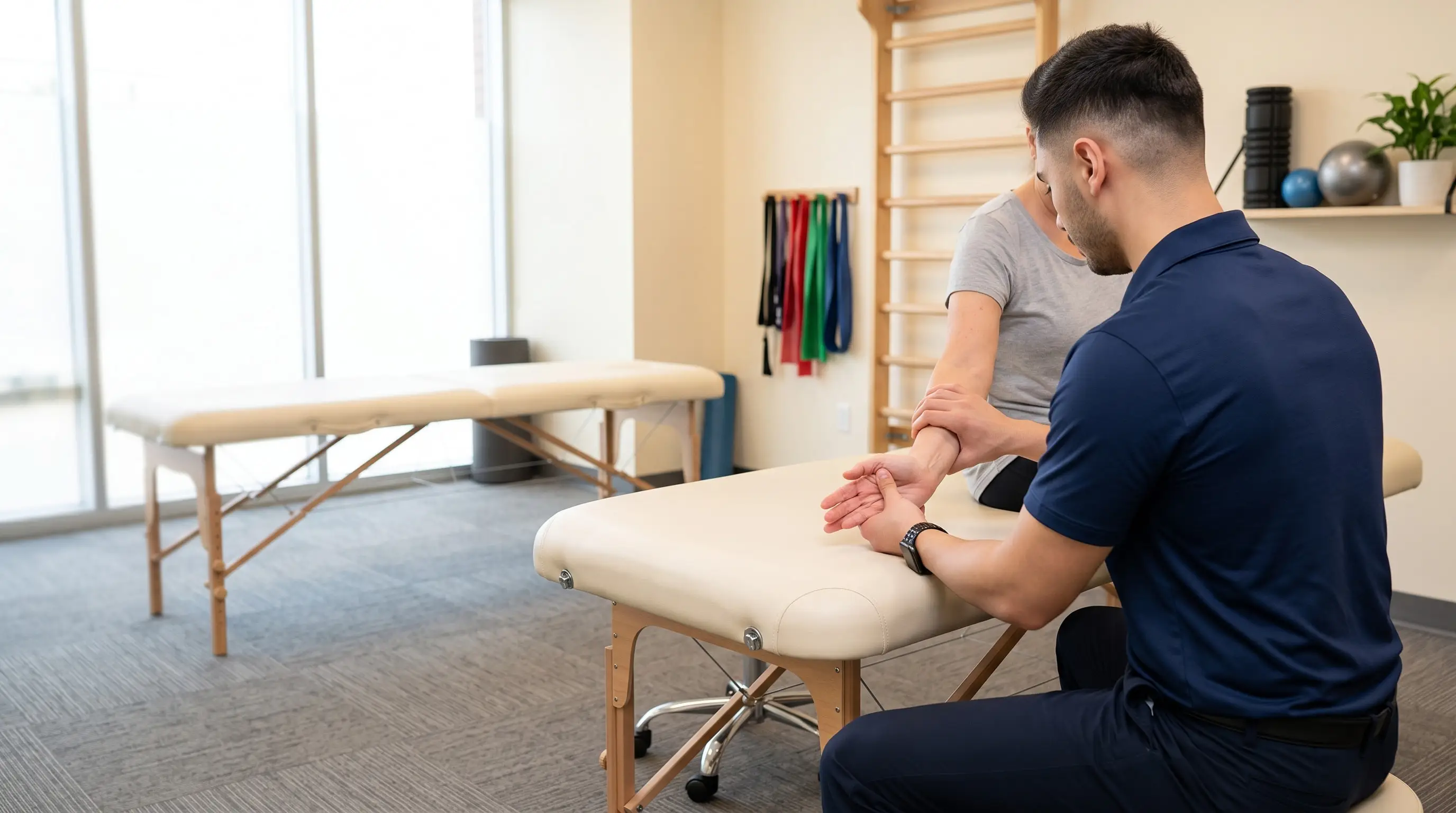
How Can Physiotherapy Help with Post-Fracture Rehabilitation?
The immobilisation period following a fracture (cast, splint, etc.) can lead to joint stiffness, muscle weakness and restricted movement. Physiotherapy offers evidence-based approaches for regaining range of motion and returning to functional capacity after fracture healing.
Physiotherapy Assessment
The first step in the physiotherapy process is a comprehensive post-immobilisation assessment. The assessment covers:
- Fracture site, type and healing status
- Range of motion of the affected joints
- Strength and endurance levels of surrounding muscles
- Oedema (swelling) and circulation status
- Limitations in daily activities
Physiotherapy Approaches
The approaches used in post-fracture rehabilitation vary depending on the fracture location and stage of recovery, and may include:
- Manual therapy — joint mobilisation to address stiffness in joints around the fracture site and gradually improve range of motion
- Therapeutic exercise — progressive strengthening programme, addressing muscle atrophy and building endurance
- Oedema management — techniques aimed at reducing swelling
- Home exercise programme — regularly continuing exercises learnt during sessions at home
The extent to which each approach is applied is determined based on individual assessment, the stage of fracture healing and the loading and range-of-motion restrictions that follow from it.
When Should You See a Physiotherapist?
The physiotherapy process can begin once the cast or splint is removed following a fracture. A physiotherapy assessment shapes a rehabilitation plan tailored to your condition; loading is increased step by step as bone healing becomes clear. Beginning rehabilitation early can support the return to functional capacity.
You can book an appointment for an assessment and to plan your rehabilitation after a fracture.
This content is for informational purposes only. It is not intended as medical advice. Please consult your physician and physiotherapist for any health concerns.